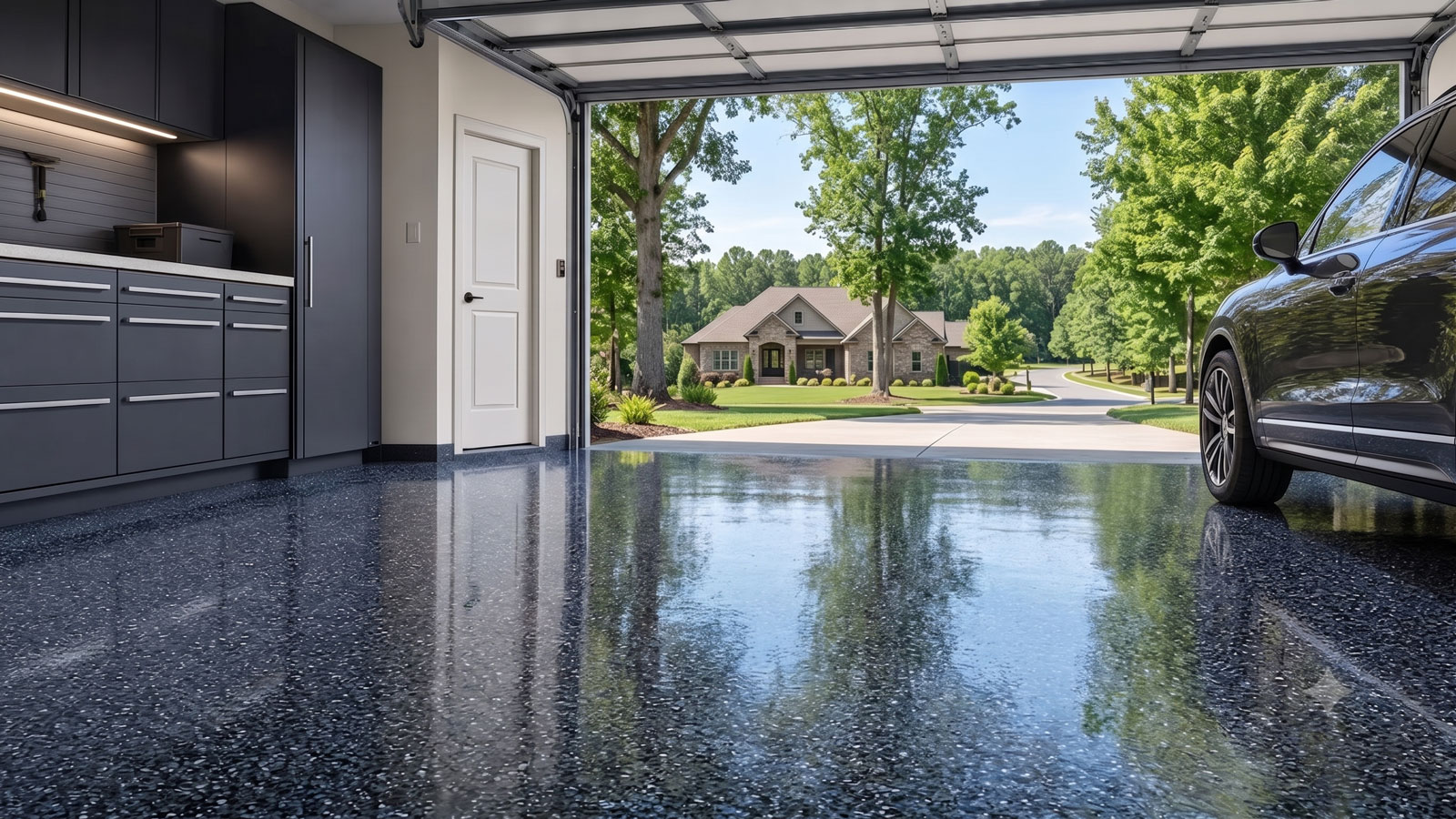
Garage Floor Coating in Avon, IN
Floor Coating Services in Avon, IN
Avon is a relatively young incorporated town whose modern growth is striking. The town incorporated in 1995, and population rose from 6,248 in 2000 to 12,446 in 2010 and about 22,000 by the 2020 census. Development around U.S. 36 and Avon Avenue transformed former open land into subdivisions, retail corridors, roads, roofs, and a large stock of attached garage concrete.
That development also changed natural runoff patterns. Avon operates a stormwater utility because residential and commercial growth increases impervious surface and alters how rainfall and snowmelt reach streams. White Lick Creek is a defining local drainage feature, while neighborhood ponds, ditches, and newer storm systems handle water at a smaller scale.
Many Avon garage projects therefore begin with relatively young slabs, but young does not mean ready. Curing compounds, sealers, dense finishes, control joints, and builder repairs can all interfere with adhesion. Established properties can add paint or repair history, and every lot still needs a direct look at driveway and threshold drainage.
Local Market Insight
Avon's population more than tripled from 2000 to 2020, producing a garage market dominated by modern subdivision concrete. The town's stormwater utility and White Lick Creek context make development-driven runoff a second, separate local issue.
What Affects the Cost of Garage Floor Coating in Avon?
Avon project scope often centers on builder treatments, joints, multi-bay layouts, subdivision drainage, winter residue, and cure timing. Older properties can add prior coatings or repairs, but the dominant local question is whether relatively young concrete has been properly profiled and whether the lot sends water toward the garage.
- Young subdivision concrete: Rapid growth means many Avon slabs are recent but can still carry curing compounds, sealers, smooth finishes, or construction residue that must be mechanically removed before coating.
- Builder repairs and control joints: Newer floors can contain patch areas and multiple joints even without visible wear. The scope should identify how each will be treated before the decorative system is applied.
- White Lick Creek and stormwater: Town drainage infrastructure manages development runoff, but creek context alone does not diagnose a garage. Actual driveway flow, threshold water, and persistent dampness should drive site recommendations.
- Impervious-surface growth: More streets, roofs, and driveways change runoff from former open land. New subdivisions still need property-level checks of grading, downspouts, ponding, and apron drainage.
- Multi-bay garage details: Three-car layouts, steps, stem walls, cabinets, and storage edges add perimeter and detail preparation that is not captured by open-floor square footage alone.
- Family use and winter cleanup: Daily entry, sports gear, snowmelt, salt, and stored items influence traction, cleaning, staging, and cure timing after the slab is mechanically prepared.
Call for a clear, project-specific estimate — or request one online.
Local Garage-Floor Conditions in Avon
A newer Avon floor should be inspected for invisible surface treatments before any coating is selected. Clean appearance can hide sealers or curing products, and the surface may be too smooth for reliable adhesion without mechanical profiling.
Stormwater should be evaluated as a separate property issue. Avon has formal drainage infrastructure, but neighborhood systems cannot change a driveway that directs water toward the door. Repeated threshold ponding or entry should be corrected rather than covered.
Garage size and household use then affect staging and finish. A storage-heavy three-car garage can require substantial moving, edge grinding, and joint work even when the slab is structurally good. Those items should appear explicitly in the estimate.
Avon's 2000-to-2020 Growth Changed the Garage Stock
Avon's population growth is one of the clearest local anchors for its garage-floor market. The town roughly doubled from 2000 to 2010 and grew to about 22,000 residents by 2020, while the greater Avon area expanded even more. Much of the current housing stock therefore comes from recent subdivision eras.
That means the preparation challenge often shifts away from decades of old paint and toward builder-applied materials. Curing compounds, sealers, dense finishes, patch products, and control joints can all affect a slab that appears new and undamaged. Mechanical profiling remains essential.
Older Avon properties are still part of the market, so the floor should never be assumed young from the town's growth rate alone. The useful estimate identifies actual coating history, repairs, surface treatment, and joint layout before price is attributed to the neighborhood or home age.
White Lick Creek, Stormwater Utility, and New Development
Avon's stormwater utility exists because development changes natural water movement. More impervious surface means rainfall and snowmelt reach drains, ponds, ditches, and streams faster than they did across undeveloped land. White Lick Creek and neighborhood drainage systems provide the broader local framework.
For a garage-floor project, that framework should trigger a property inspection rather than an automatic moisture conclusion. Watch the driveway during heavy rain, note low spots at the apron, check downspout discharge, and look for repeated dampness or coating failure inside. Those observations are what matter to the slab.
A coating improves cleanability when cars bring in rain, snow, and salt, but it cannot correct grading. A strong Avon quote separates drainage correction from grinding, joint treatment, builder-product removal, repairs, and finish choice. That makes rapid-growth drainage issues understandable without turning every new subdivision into a moisture problem. Avon homeowners should also expect garage layout to influence labor. Multiple bays, steps, stem walls, storage alcoves, and built-in cabinets add detail work that is separate from builder-treatment removal and separate again from any drainage correction.
Avon Garage Floor Coating FAQs
Why can a newer Avon garage still need heavy preparation?
Curing compounds, sealers, dense finishes, and builder residue can interfere with adhesion. New concrete still needs mechanical profiling even when it has almost no visible wear.
What does Avon's rapid growth mean for garage floors?
Much of the housing stock is relatively recent, so builder treatments, joints, and subdivision grading are common considerations. Older coatings are less universal but still need inspection where present.
Does White Lick Creek mean a garage has a moisture problem?
No. It provides drainage context. Actual threshold water, persistent dampness, mineral deposits, and previous coating failure should determine whether moisture-related work is needed.
Can a modern subdivision still have poor garage drainage?
Yes. Neighborhood stormwater systems may be well designed while one driveway or downspout still sends water toward the door. Inspect the individual lot after rain or thaw.
What adds scope in a storage-heavy Avon garage?
Cabinets, shelving, freezers, steps, multiple bays, and stored equipment add moving, masking, edge preparation, and staging beyond the main slab area.
Avon Neighborhoods & Local Context
Phone Quote Line
Speak with a floor coating specialist about your project and get a realistic estimate range.
(317) 733-5558Typical Project Cost
$3,000–$5,500
Typical range for a two-car garage. Final pricing depends on floor size, concrete condition, prep work, coating type, and finish options.
Helpful Guides
Other Service Areas