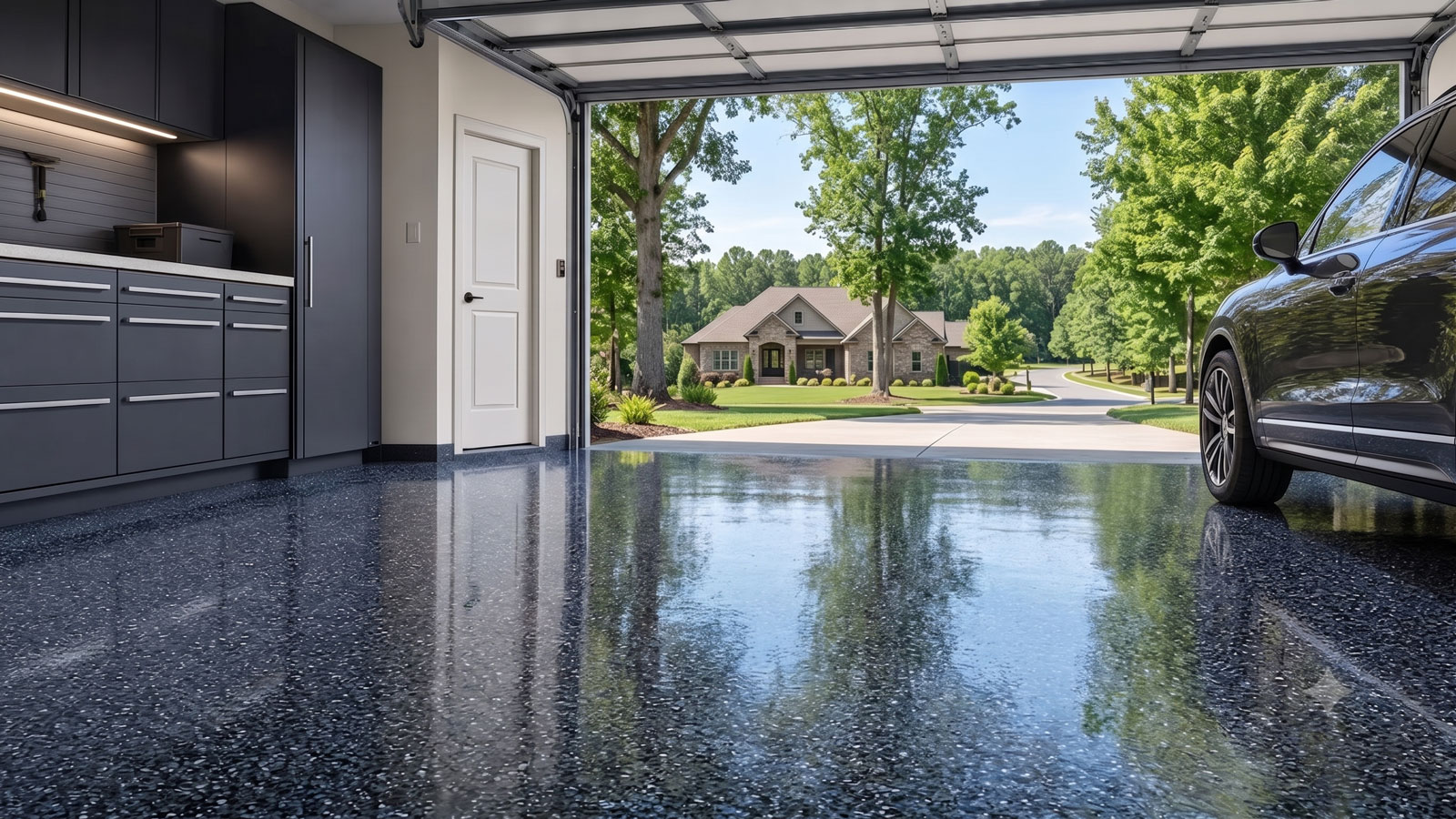
Garage Floor Coating in Zionsville, IN
Floor Coating Services in Zionsville, IN
Zionsville combines a compact historic village with a much larger modern municipal footprint. Growth accelerated during the twentieth century, and mergers with Eagle and Union Townships in 2010 and Perry Township in 2014 expanded the town's corporate limits by more than 1,000 percent, adding roughly 58 square miles. That means village garages, suburban attached floors, and rural-style detached shops all exist within the same service area.
Eagle Creek is the main stream through the community, and Zionsville lies only a short distance upstream of Eagle Creek Reservoir. The town operates a stormwater program across this varied landscape, where compact village lots, subdivision detention, rural ditches, long drives, and natural drainage can move water very differently.
For coating work, that municipal variety matters. A Village-area garage may have paint, repairs, or a later repour; a suburban floor can have builder sealers, curing products, and multiple bays; a former-township shop may have oil, equipment traffic, multiple pours, and more difficult access. The slab and property type should drive the preparation.
Local Market Insight
Zionsville's township mergers created an unusually diverse service area: historic village lots, suburban neighborhoods, and large rural-service-district properties coexist within one town. Eagle Creek drainage and different property forms make both access and runoff highly site-specific.
What Affects the Cost of Garage Floor Coating in Zionsville?
Zionsville project scope varies with property type as much as slab age. Historic-village repairs, suburban builder treatments, rural-shop contamination, long-drive access, Eagle Creek drainage, and garage geometry can create very different preparation needs within the same municipal boundary.
- Village versus township-era property type: Compact historic garages, suburban attached bays, and rural-style detached shops can have different slab histories, access, and use. The estimate should identify the actual property type rather than treating Zionsville as one uniform suburb.
- Old coatings and later repours: Village-area floors may have paint, patch compounds, repairs, or concrete added after the house was built. Those transitions need to be exposed and evaluated before coating.
- Builder treatments on suburban slabs: Newer subdivision concrete can carry curing compounds, sealers, smooth finishes, and builder repairs that need mechanical removal or profiling despite a clean appearance.
- Eagle Creek and lot drainage: Watershed context makes runoff worth checking, but actual driveway flow, ditch behavior, threshold water, and slab dampness should determine whether drainage work is required.
- Detached-shop access and contamination: Former-township properties may involve long drives, equipment storage, oil exposure, multiple pours, and heavier traffic that add cleaning, staging, and traction requirements.
- Garage geometry and end use: Multi-bay attached garages and working shops can need very different edge, joint, texture, and cure-time plans even when their total square footage is similar.
Call for a clear, project-specific estimate — or request one online.
Local Garage-Floor Conditions in Zionsville
Zionsville's expanded boundary makes a city-swap assumption especially risky. A garage in the Village may have tight access and decades of repairs, while a former-township property can have a detached slab exposed to equipment and natural drainage. The coating plan should begin with that physical context.
Water should be evaluated the same way. Eagle Creek is an important local watershed, but the relevant garage evidence is driveway slope, ditch flow, downspout discharge, threshold entry, and persistent dampness. A rural property and a compact village lot can fail to drain for completely different reasons.
Newer attached garages still require proper surface profiling. Builder-applied materials and dense finishes can be just as important to adhesion as old paint is on an established floor. The estimate should separate those concrete tasks from access, drainage, and finish choice.
A Historic Village Inside a Much Larger Modern Zionsville
Zionsville's recent boundary history is a major local differentiator. Township mergers increased the corporate footprint by more than tenfold and brought large rural and suburban areas under the same town name as the compact historic Village. That means a Zionsville address alone says very little about the type of garage or concrete present.
In the Village, a smaller garage may be detached, later-added, repaired, or tightly accessed. In suburban areas, larger attached garages are more common and may have young concrete with builder treatments. In former township areas, shops and oversized garages can involve equipment, oil, longer drives, and natural drainage.
A strong quote should identify which of those conditions is actually present. The same coating chemistry may work across different properties, but removal, profiling, repair, edge work, staging, and traction priorities can vary dramatically. The site inspection is what turns the common system into a local plan.
Eagle Creek Watershed and Large-Lot Drainage
Eagle Creek is the main stream through Zionsville and connects the community to the larger Upper White River watershed and Eagle Creek Reservoir. The town's stormwater program reflects that relationship, but runoff reaches a garage through the much smaller network of drives, ditches, swales, yards, and roof discharge on each property.
That is especially important across the rural service district. Long driveways and open drainage can behave differently from curb-and-gutter suburban streets, while compact Village lots may have limited space for water to spread. Neither setting automatically means slab moisture; both require direct observation of where stormwater actually travels.
For a coating project, recurring exterior entry should be corrected first. Then the installer can address coatings, contamination, cracks, builder treatments, and surface profile. Separating watershed context from the slab prevents unnecessary moisture assumptions while still respecting a genuine local drainage issue. That separation is especially important across Zionsville's expanded boundary because Village, suburban, and rural-service-district properties can route water and use garage space very differently.
Zionsville Garage Floor Coating FAQs
Why are Zionsville garage projects so different within one town?
Township mergers greatly expanded Zionsville's boundaries, so historic Village garages, suburban attached floors, and rural-style detached shops all share the same municipal name.
Does Eagle Creek proximity automatically mean slab moisture?
No. It makes runoff worth inspecting, but driveway flow, ditch behavior, threshold water, persistent dampness, and prior coating failure are the property-level evidence that matters.
What should be checked in a rural-style Zionsville shop?
Look for oil contamination, equipment wear, multiple pours, repairs, ventilation, drainage, and equipment access in addition to ordinary crack and coating history.
Can a newer Zionsville slab still need heavy preparation?
Yes. Curing compounds, sealers, dense finishes, and builder repairs can interfere with adhesion even when the concrete looks clean and relatively new.
How can Village access affect the project?
Tighter drives, detached buildings, perimeter edges, steps, and limited staging space can add labor that is not obvious from floor square footage alone.
Zionsville Neighborhoods & Local Context
Phone Quote Line
Speak with a floor coating specialist about your project and get a realistic estimate range.
(317) 733-5558Typical Project Cost
$3,000–$5,500
Typical range for a two-car garage. Final pricing depends on floor size, concrete condition, prep work, coating type, and finish options.
Helpful Guides
Other Service Areas