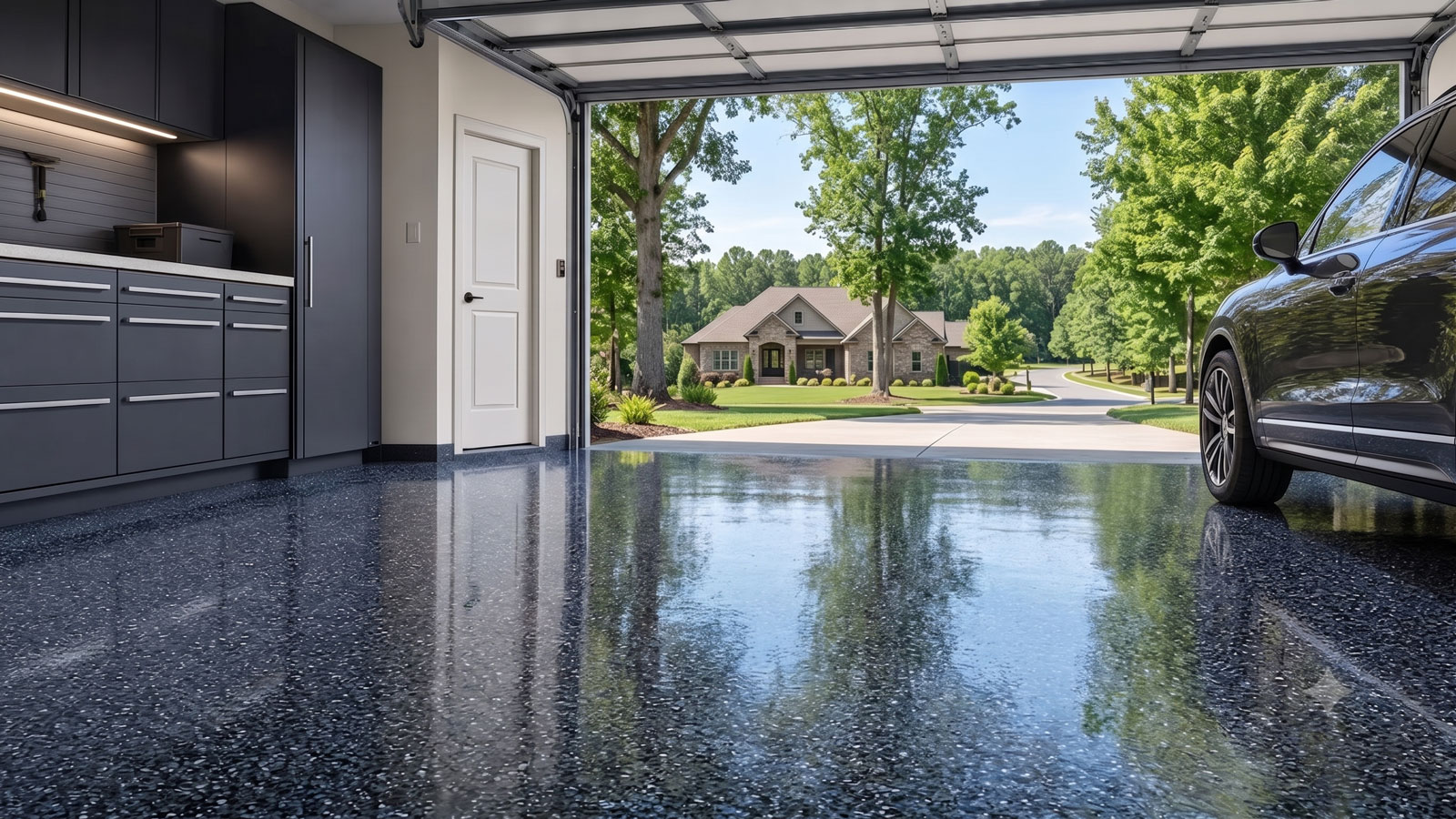
Garage Floor Coating in Brownsburg, IN
Floor Coating Services in Brownsburg, IN
Brownsburg traces its settlement history to the 1820s and 1830s, but today's garage market includes a much larger modern suburban community. The town's stormwater master plan cites a population of roughly 32,000 and projects continued growth that could increase population by about 52 percent by 2043. That produces a mix of established in-town floors, postwar subdivisions, and extensive newer attached-garage concrete.
White Lick Creek is part of Brownsburg's local geography, and the town operates an MS4 stormwater program that manages drainage improvements, system maintenance, inspections, and runoff quality. As development adds pavement and roofs, lot grading and detention matter, but an individual garage still needs its own check of driveway slope, downspout discharge, and threshold water.
Older Brownsburg garages may contain paint, oil staining, repairs, or later concrete work, while newer growth-area slabs can look clean but still carry curing compounds, sealers, dense finishes, builder patches, and control joints. The preparation plan should follow those actual conditions rather than treating the town as one construction era.
Local Market Insight
Brownsburg combines an older town core with strong continued suburban growth. Its White Lick Creek setting and active stormwater program make development-driven runoff locally relevant, while the concrete itself ranges from altered established floors to young builder-treated slabs.
What Affects the Cost of Garage Floor Coating in Brownsburg?
Brownsburg project scope varies with old coating removal, builder treatments, repairs, joints, subdivision drainage, multi-bay layout, winter residue, and garage use. Continued population growth means both mature and very recent garage concrete are part of the same market.
- Established-floor coatings and repairs: Older Brownsburg garages can have paint, oil, patch compounds, later repours, and crack repairs that require removal or stabilization before the new system reaches sound concrete.
- New growth-area surface treatments: Young slabs can still contain curing compounds, sealers, dense finishes, and builder residue. Those materials need mechanical profiling or removal despite the floor's clean appearance.
- White Lick Creek and drainage: Creek context and town stormwater management make runoff worth checking, but actual threshold entry, ponding, dampness, and prior coating failure should determine water-related scope.
- Development-driven grading: New roofs, roads, and driveways alter runoff patterns. A modern subdivision can still have one lot where driveway pitch or downspouts concentrate water at the garage.
- Cracks, joints, and detail work: Control joints, stable cracks, steps, stem walls, storage edges, and perimeter grinding add preparation tasks beyond the main open-floor square footage.
- Winter and household use: Salt, grit, snowmelt, daily vehicle traffic, and family-entry use affect cleanability and traction. These finish priorities come after proper concrete preparation.
Call for a clear, project-specific estimate — or request one online.
Local Garage-Floor Conditions in Brownsburg
Determine the slab generation first. An established Brownsburg house may have a later garage addition or repour, while a new subdivision floor may be original but coated with builder-applied products. Joint lines, texture changes, and patching reveal more than address age.
Then inspect drainage independently. The town's stormwater program manages public systems and improvements, but repeated water at a garage door is still a property-level issue. Observe driveway and downspout behavior during rain or thaw before adding moisture assumptions to the coating scope.
Finally, account for garage geometry and use. Modern multi-bay floors add joints and edges, while older utility spaces may involve oil and repair history. A complete quote should list those tasks so square footage does not hide the actual preparation.
Brownsburg's Historic Core and Continued Growth
Brownsburg's history reaches back to early nineteenth-century settlement, yet current planning is focused on substantial future growth. That combination creates several garage generations within the same town: older in-town concrete, established subdivision floors, and recent multi-bay attached garages.
Each generation brings a different likely preparation profile. Older floors may have coating layers, oil, repairs, and repours, while newer floors may have fewer visible defects but more builder surface treatments and control joints. Neither profile can be judged accurately from appearance alone.
The homeowner should expect the estimate to identify the actual work: coating removal, profiling, repairs, joint decisions, edge grinding, and staging. That makes future-growth neighborhoods and older properties comparable on preparation rather than on simplistic assumptions about age.
White Lick Creek and a Growing Stormwater System
Brownsburg operates an MS4 stormwater program and has a master plan specifically focused on system capacity, maintenance, drainage, and growth. The town's projected expansion means runoff from new impervious surfaces will remain an active infrastructure issue, with White Lick Creek providing part of the natural drainage context.
At a garage, the practical indicators are still local. Water at the threshold, apron ponding, downspouts near the drive, persistent dampness, or an earlier coating that failed in a recurring wet area are actionable. A creek or stormwater designation by itself is not enough to select a different coating system.
Active exterior water should be corrected first, then the slab can be prepared for the chosen system. This keeps Brownsburg's real stormwater context connected to the project without confusing public drainage planning with ordinary snowmelt, wet vehicles, or a concrete-surface preparation problem. Brownsburg's continued growth also makes garage layout and household use important. Newer homes may have three-car bays, storage zones, and more joints, while older spaces can have tighter access or workshop history. Those conditions affect staging, traction, perimeter work, and return-to-service planning even when the coating chemistry is familiar.
Brownsburg Garage Floor Coating FAQs
Why can Brownsburg garages vary so much in preparation needs?
The town includes older in-town floors, established subdivisions, and rapid newer growth. Old coatings and repairs are common on some slabs, while builder treatments and joints dominate others.
Does White Lick Creek proximity automatically require moisture treatment?
No. Creek context makes drainage worth inspecting, but actual threshold water, dampness, mineral deposits, and previous coating failure should determine any water-related work.
What should be checked on a newer Brownsburg slab?
Look for curing compounds, sealers, smooth finishes, builder repairs, and control joints. A clean appearance does not mean the floor can skip mechanical profiling.
Can growth-area grading still send water toward a garage?
Yes. Public stormwater systems manage neighborhood runoff, but the individual driveway and downspouts determine whether water collects at a specific threshold.
How should winter use affect the finish?
Choose practical traction and easy cleanup for snowmelt, salt, and grit, while planning routine maintenance. Winter use changes finish priorities but does not replace proper slab preparation.
Brownsburg Neighborhoods & Local Context
Phone Quote Line
Speak with a floor coating specialist about your project and get a realistic estimate range.
(317) 733-5558Typical Project Cost
$3,000–$5,500
Typical range for a two-car garage. Final pricing depends on floor size, concrete condition, prep work, coating type, and finish options.
Helpful Guides
Other Service Areas