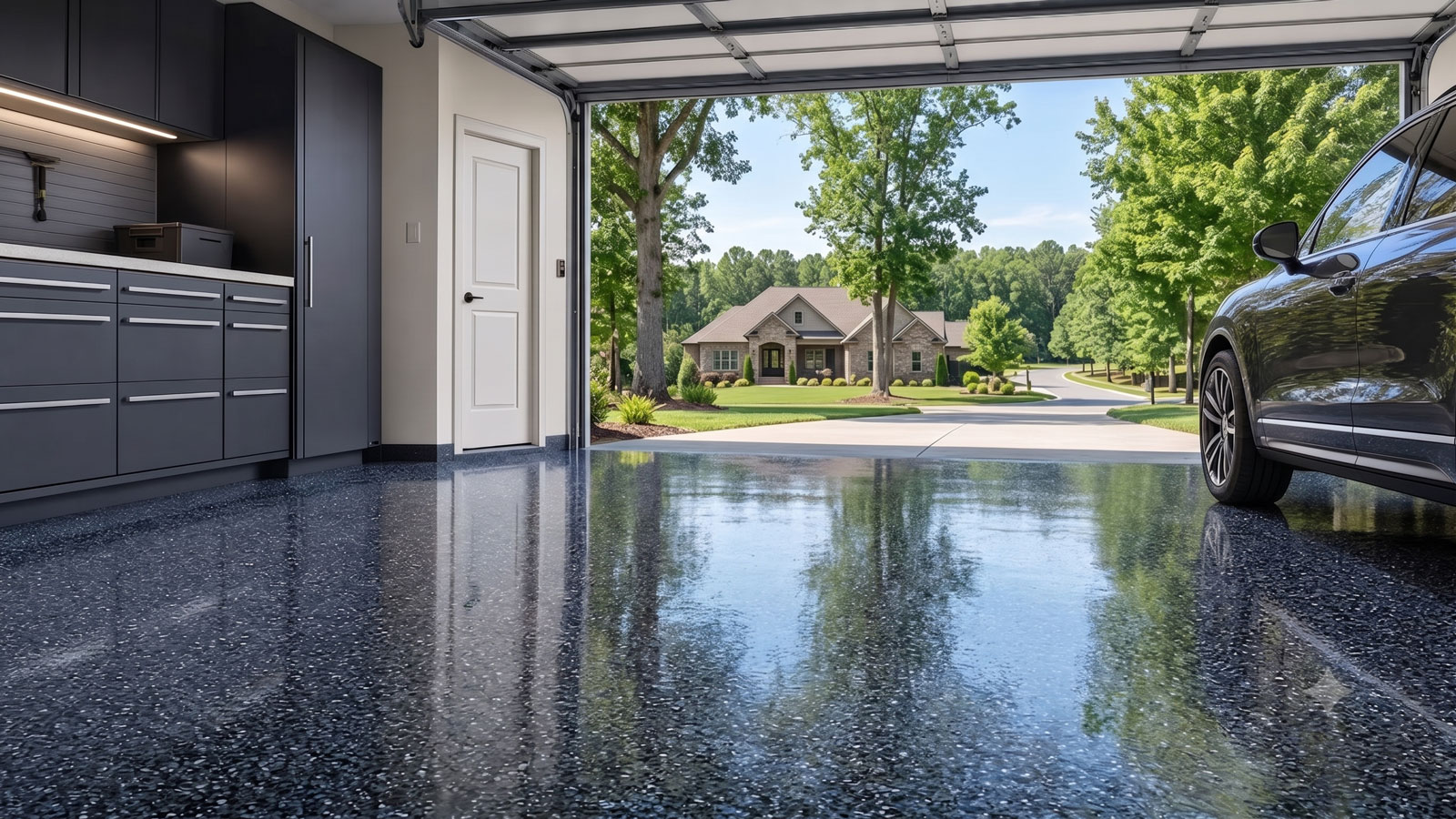
Garage Floor Coating in Fishers, IN
Floor Coating Services in Fishers, IN
Fishers was platted along the railroad as Fishers Switch in 1872 and remained extremely small for generations; the 1960 census counted only 388 residents. State Road 37, I-69, sanitary-sewer expansion, schools, and later Geist-area development changed that trajectory. The population reached 7,187 in 1990, 78,651 in 2010, and more than 100,000 by the early 2020s, creating a garage market dominated by relatively recent suburban concrete.
Rapid growth also created a large engineered drainage network. Fishers' stormwater division maintains about 17,000 storm sewer pipes and 19,000 storm drains, while the city tracks twelve watersheds. Geist Reservoir, created by damming Fall Creek in 1943, covers roughly 1,890 acres and adds a distinct lake-oriented part of the city where driveway grade and wet recreational use can differ from inland subdivisions.
The practical implication is that many Fishers garages look young but are not automatically coating-ready. Curing compounds, sealers, smooth finishes, builder patches, control joints, and fresh grading can all affect the project. In older pockets or heavily used garages, prior coatings and repairs may add a different preparation layer.
Local Market Insight
Fishers is a fast-growth city where younger garage concrete is common, yet builder treatments and subdivision drainage still require close inspection. The city's twelve watersheds, extensive storm-sewer network, and Geist Reservoir make lot-specific runoff especially relevant.
What Affects the Cost of Garage Floor Coating in Fishers?
Fishers project scope often depends less on decades of old paint and more on builder-applied treatments, joint layout, multi-bay geometry, drainage, stored items, and cure-time demands. Geist-area use and newer subdivision grading can add distinct considerations even when the concrete is structurally young.
- Young concrete and builder treatments: Many Fishers slabs are relatively recent but can still contain curing compounds, sealers, smooth finishes, or construction residue. These materials must be mechanically removed or profiled before coating.
- Control joints and builder repairs: Newer multi-bay floors often include numerous control joints, patch locations, and stem-wall details. The estimate should explain how each will be treated rather than simply coating over them.
- Subdivision drainage: Modern storm sewers manage neighborhood runoff, but individual driveways can still pitch toward the door. Actual threshold water and dampness should determine whether drainage work is needed.
- Geist-area garage use: Lake-oriented garages may see wet recreational gear, trailers, and frequent water cleanup. Those use conditions influence traction and maintenance but are separate from diagnosing slab moisture.
- Larger attached layouts: Three-car bays, storage alcoves, steps, and built-ins add edge preparation and staging beyond the open floor area, even when the slab itself has little wear.
- Fast return to daily use: Busy family garages often need vehicles and storage back quickly. Cure timing should be planned around real household use without shortening the preparation steps that determine adhesion.
Call for a clear, project-specific estimate — or request one online.
Local Garage-Floor Conditions in Fishers
A new-looking Fishers slab should still be tested by inspection, not appearance. Builder treatments may be invisible, and control joints or small patches can indicate where the floor needs different detail work. Mechanical preparation must expose a suitable concrete surface across the entire system.
Fishers' stormwater infrastructure is extensive, but the homeowner-level question remains simple: where does water go at this driveway? Ponding at the apron, runoff from roof discharge, or repeated threshold entry should be addressed separately from ordinary snowmelt and rainwater carried in on vehicles.
Geist-area and inland suburban garages can also have different daily use. Wet recreational equipment, bicycles, sports gear, lawn equipment, storage systems, and household-entry traffic affect traction, cleaning, staging, and return-to-service priorities after the slab is prepared.
Fishers' 1990-to-Present Growth Created a Young Garage Market
Fishers' growth is unusually dramatic even by Indianapolis-suburb standards. A community of only hundreds in 1960 had more than 7,000 residents by 1990 and tens of thousands more within two decades. That means a large share of the current garage stock was built during successive waves of modern subdivision construction rather than inherited from a nineteenth- or early-twentieth-century urban fabric.
Younger floors reduce some problems, but they introduce others. Builder curing products, surface sealers, dense machine finishes, control joints, and construction patches can prevent reliable adhesion if the slab is simply cleaned and coated. A professional scope should describe mechanical profiling just as clearly as color or flake selection.
Rapid development also means house age and slab condition are not the same thing. A ten-year-old garage can still have failed DIY coating or chemical contamination, while an older Fishers pocket may have a replacement slab that is newer than the structure. The concrete itself remains the evidence.
Twelve Watersheds, Geist Reservoir, and Local Runoff
Fishers tracks twelve watersheds and maintains a very large stormwater network, reflecting how much runoff must be managed across a fast-growing city. The system includes thousands of pipes and drains as well as floodplain, stream, and water-quality programs. That broader infrastructure explains why drainage belongs in a local garage inspection.
Geist Reservoir creates an additional context in southeast Fishers. Lake-oriented property use can mean trailers, wet gear, frequent washing, and large paved drives, while floodplain rules also apply near waterways. None of those facts proves a slab has moisture moving through it; they simply make direct observation more important.
The homeowner should separate wet use from water intrusion. A garage that gets wet because a boat trailer or snowy vehicle comes inside mainly needs cleanability and traction. A garage where exterior runoff repeatedly crosses the threshold needs the water path corrected. The coating should be selected only after those two conditions are distinguished.
Fishers Garage Floor Coating FAQs
Why can a newer Fishers garage still need heavy surface preparation?
Builder curing compounds, sealers, smooth finishes, and construction residue can interfere with adhesion. Young concrete still needs mechanical profiling to create a reliable bonding surface.
What do Fishers' twelve watersheds mean for a garage project?
They show that runoff is managed through many local drainage systems, but the garage decision still depends on the specific driveway, threshold, downspouts, and actual dampness at the property.
Does living near Geist Reservoir automatically mean slab moisture?
No. Lake proximity and floodplain context are reasons to inspect drainage, not proof of moisture through the slab. Look for actual water entry, dampness, deposits, and prior coating failure.
How can lake-oriented use change the finish?
Wet recreational gear, trailers, and frequent cleanup can make traction and cleanability especially important. Those use needs should be considered separately from concrete preparation and moisture diagnosis.
What tends to add labor in a Fishers three-car garage?
Extra bays, joints, steps, stem walls, built-in storage, and perimeter edges can add detailed grinding and staging even when the main slab is relatively new.
Fishers Neighborhoods & Local Context
Phone Quote Line
Speak with a floor coating specialist about your project and get a realistic estimate range.
(317) 733-5558Typical Project Cost
$3,000–$5,500
Typical range for a two-car garage. Final pricing depends on floor size, concrete condition, prep work, coating type, and finish options.
Helpful Guides
Other Service Areas