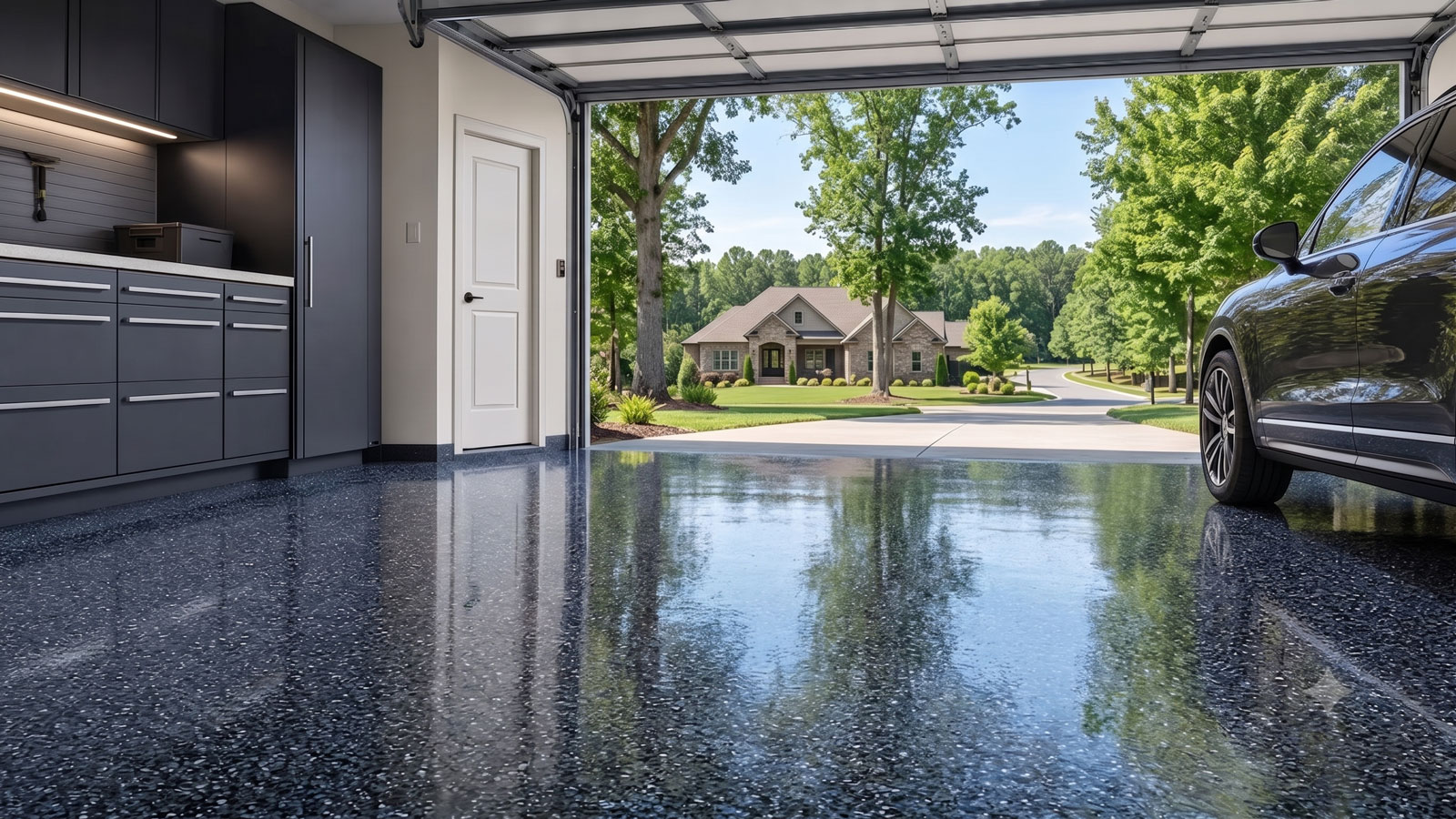
Garage Floor Coating in Greenwood, IN
Floor Coating Services in Greenwood, IN
Greenwood sits just south of Indianapolis and has grown as both an older Johnson County community and a major suburban center connected by I-65, U.S. 31, and State Road 135. The city and surrounding area contain established in-town garages, postwar subdivisions, Center Grove-area growth, and newer east-side development, so slab age and garage form can vary substantially.
Growth has also increased the amount of impervious surface that Greenwood must manage. The city operates a stormwater utility and master plan, and planning documents identify waterways and drainage systems such as Hurricane Creek and East Grassy Creek in growth areas. New roads, roofs, and driveways make lot grading and detention important even on relatively new properties.
For garage floors, an established property may have paint, oil staining, repairs, or a later repour, while a newer slab can still contain curing compounds, sealers, builder patches, and control joints. Stormwater context should be evaluated separately from those surface conditions so exterior runoff is not mistaken for a coating problem.
Local Market Insight
Greenwood combines established city neighborhoods with major I-65 and south-metro growth. Its stormwater utility and development planning reflect increasing impervious surface, making lot drainage important alongside the very different preparation needs of older and newer garage concrete.
What Affects the Cost of Garage Floor Coating in Greenwood?
Greenwood project scope can be driven by old coatings and repairs on established floors, builder treatments on newer slabs, stormwater and lot grading, winter residue, multi-bay geometry, access, and garage use. The actual slab and property conditions matter more than a general south-metro label.
- Established floor history: Older Greenwood garages can contain paint, oil staining, repairs, or concrete added during later expansions. Those conditions may require removal, degreasing, patch work, and separate treatment of transitions.
- Growth-area surface treatments: Newer slabs can have curing compounds, sealers, dense finishes, or builder residue that must be mechanically removed or profiled before coating.
- Stormwater and impervious-surface growth: The city manages runoff as development adds pavement and roofs. Actual driveway grade, threshold water, and downspout discharge should determine whether drainage correction belongs in the project.
- Creeks and floodplain context: Hurricane Creek, East Grassy Creek, and other drainage features provide local context, but waterway proximity should not substitute for inspecting the garage's actual water history.
- Multi-bay and storage detail: Newer south-metro garages can add bays, steps, storage edges, stem walls, and control joints that increase detailed preparation beyond the main open floor.
- Winter traffic and daily use: Salt, grit, snowmelt, household entry, and workshop activity influence traction and maintenance priorities. These use choices should follow proper slab preparation, not replace it.
Call for a clear, project-specific estimate — or request one online.
Local Garage-Floor Conditions in Greenwood
Greenwood projects should start by separating the established-floor problems from new-construction problems. Old paint and oil require one kind of removal, while invisible curing products and smooth finishes on young concrete require another. Both can prevent reliable adhesion if they remain.
Drainage deserves its own inspection because citywide stormwater investment cannot control the pitch of an individual driveway. Watch heavy rain or snowmelt, note where downspouts discharge, and identify any repeated threshold entry before deciding whether exterior work is needed.
Garage layout and use can then shape the finish. A family-entry three-car garage has different staging and traction priorities from an older one-car workshop, even if both ultimately receive a similar coating system. The quote should make those differences explicit.
Established Greenwood and New South-Metro Growth
Greenwood's location just south of Indianapolis has produced several generations of development. Older city neighborhoods and postwar housing coexist with large newer growth areas around major corridors. That gives the market a broader slab-age range than a subdivision-only suburb.
Established floors may show decades of oil, coating, repairs, or later concrete work, while newer floors shift the challenge toward builder sealers, curing products, dense finishes, and joint layout. The surface can look cleaner while still requiring extensive mechanical preparation.
For homeowners, the important question is not which era is better but which tasks are actually needed. A useful estimate identifies removal, degreasing, repairs, profiling, edge work, and joint treatment separately so a new-looking floor is not assumed to be an easy coating job.
Greenwood Stormwater and Development-Driven Runoff
Greenwood maintains a stormwater utility and master plan because development changes how rainfall and snowmelt move across the landscape. Planning documents specifically address increasing impervious surface and the need for detention, ditches, drains, and other infrastructure in growth areas.
That citywide work provides context for the garage but not a diagnosis. The relevant evidence is whether water ponds at the apron, travels down a driveway, discharges from a roof toward the garage, or remains along slab edges after a storm. A property can be near a creek and stay dry, or be far from one and still have poor grading.
The project should therefore treat drainage correction and concrete preparation as two separate scopes. Once active exterior water is addressed, the installer can focus on coatings, contamination, repairs, builder treatments, traction, and cure timing. That sequence keeps stormwater planning connected to homeowner consequences without overgeneralizing. A useful Greenwood estimate should also list the garage's access and end use. A family-entry three-car garage, an older workshop, and a detached utility space can require different staging, traction, edge work, and contamination cleanup even when the open floor area is similar.
Greenwood Garage Floor Coating FAQs
Why can older and newer Greenwood garages need different preparation?
Established floors may have paint, oil, repairs, and later pours, while newer slabs often need builder sealers, curing compounds, and dense finishes removed or profiled.
Does living near a Greenwood creek automatically mean slab moisture?
No. Creeks provide drainage context, but actual threshold water, dampness, mineral deposits, and prior coating failure are the evidence that should affect the project.
Why does rapid development matter to garage drainage?
More roofs, roads, and driveways increase impervious surface. Neighborhood drainage may be engineered, but the individual driveway and downspouts still determine whether water reaches the garage.
What adds labor in a newer Greenwood multi-bay garage?
Extra bays, joints, stem walls, steps, storage edges, and perimeter grinding can add detailed work even when the open concrete is relatively young and clean.
How should winter salt affect maintenance expectations?
A coating makes grit and salty meltwater easier to remove, but routine cleaning is still important. Durability does not mean winter residue should be allowed to accumulate indefinitely.
Greenwood Neighborhoods & Local Context
Phone Quote Line
Speak with a floor coating specialist about your project and get a realistic estimate range.
(317) 733-5558Typical Project Cost
$3,000–$5,500
Typical range for a two-car garage. Final pricing depends on floor size, concrete condition, prep work, coating type, and finish options.
Helpful Guides
Other Service Areas